Posts

Hardware Descriptive Languages (HDLs)

Image
HDLs. They might seem a daunting prospect at first look, but, once mastered, they are powerful tools for Hardware Design. A Hardware Descriptive Language, is a special kind of programming language used to describe the functioning of a hardware design. They can be used to describe everything from simple embedded system designs, to complete x64 CPU designs. While a normal, software programming language essentially contains a list of instructions that a computer has to carry out, a HDL works by describing an algorithm that a piece of hardware has to be able to carry out. A clever compiler then 'translates' this into an actual combination of logic gates which can carry out the algorithm. HDLs can be used to program FPGAs (post coming soon on them, and how they work), as well as ASIC solutions (permanent hardware set ups, like CPUs and SoCs). Let's find out a little more about them then shall we?  The options: There are a few different options of HDL. The two most well used are ...
What is a CPU Architecture?

Image
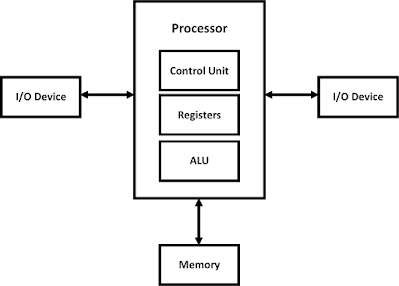
You may have heard the term CPU Architecture, or Computer architecture, but what does it actually mean? Let's find out! There are three main things that these terms usually refer to, two of which are much more common than the last.  Commercial Performance-Improvement Architecture  The first, and probably most common meaning is the design of a particular release of CPUs from a major company, (for example Zen, Zen+, Skylake, or Alder Lake to name a few). Newer kinds of these architectures generally offer superior performance, or lower power consumption, but fundamentally they use the same design ideas. They might have slightly more ALUs, or a slightly larger cache, better branch prediction, more I/O support, etc, but they are fundamentally the same. There are large differences between different architectures from different companies like AMD and Intel, but they actually have a lot in common as we're about to see: CPU Use-Case-Adaptation Design  An alternative meaning is the...

Building a PC for under £300

Image
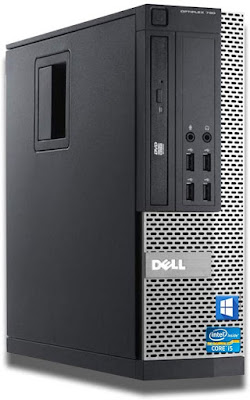
When you're building you're first PC, not everyone has £1000 to spend on a computer. With cheaper laptops offering acceptable performance for most things, justifying a more premium priced PC can be harder. Truthfully, for most day to day tasks, you don't really need anything other than a cheap laptop, unless you're gaming, or doing other demanding activities like video editing. This guide is for those who want a cheap computer, but need a little extra power. If you're just interested in browsing the Internet and writing up a few documents, you'll probably be fine with a cheap laptop, but the fact that you can get a much more powerful machine for around the same price screams of lost opportunity. Let's dive in and see how this is possible. Options We have two options, upgrade a cheap office PC, or start something from scratch. Which is best depends on what deals you can get, as to enable a PC for this price, we need to go second hand. We'll consider both ...

1st Gen AMD Ryzen - The beginning of a new era

Image
There was a dark time, not that long ago when one tech company held the world in it's fist. They were the only choice for a high performance CPU, and that safety led them to grow stagnant. Their name? Intel. There wasn't much reason to push forward and make better chips, so they didn't. They just sold refreshes and chips with slight tweaks to make a profit. But then, one day in 2017, the opposition unleashed a weapon that they had been hiding. It was the beginning of the end for Intel. Their weapon? The Zen architecture. AMD stood up to Intel when no one else could. This marked the beginning of a huge arms race, a fight were each team would fight tooth and nail to gain the performance crown and the support of the community. Eventually  AMD came out on top, but even now they're not safe. Both teams are currently waiting, busy thinking up a new plan of attack. In all seriousness, AMD's Zen architecture, and their first Ryzen CPUs began to bring competition back to the...

PSUs - Everything you need to know!

Image
What are PSUs? What types are there? Which one should I get? What cables do I need? What are the cables for? Lets discuss.  What is a PSU?  The PSU, or 'Power Supply Unit' in a computer processes the mains power and then routes it to all of the different components in the Computer at the voltages and currents that they require.  Buying notes: Due to the powerful electricity that passes through these units, it is incredibly important that they are bought from well known Power Supply manufacturers, as some cheap power supplies can damage your components, or even catch on fire! Some good reputable brands include: Corsair, EVGA, Seasonic, XFS, Cooler Master and Thermaltake.  Once you've narrowed down the options by choosing a branded option, the only other main considerations are the overall wattage the unit can pass out, and the cables available to plug in all of the components. What are the options? There are three main types of PSU, Non-Modular, Semi-Modular, and Full...

Everything you need to know about RAM

Image
What is RAM?  RAM (or Random Access Memory) is a form of volatile (loses its state when powered off) computer memory. It's used by the computer to store data that the computer is currently using, such as the instructions for applications currently open, the computer clipboard, and data being used by open applications and processes.  Why should I care?  Every modern computer has RAM in it, and a custom gaming PC is no different. If you're building a new gaming PC then choosing the right RAM for you can have a substantial impact on performance, especially if you're using an APU, or Ryzen CPU in general. Which type should I get? Modern processors generally use DDR4 (Double Data Rate version 4) RAM, and they come in sticks or 'dimms' of sizes between 4GB and 32GB for normal use. The main spec, apart from storage capacity, that you should pay attention to is the RAM speed, quoted in MHz, however the actual frequency is half the speed stated (Double Data Rate RAM can carr...

OEM Ryzen 5000G Launch

Image
AMD have just announced their 5000 Series of APUs (Basically CPUs with fairly powerful integrated graphics), and although as of now they have only released the skews for OEMs (Original Equipment Manufacturers), they have said they plan to release retail version later this year. These new APUs contain up to 8 Zen 3 Cores with 8 Vega Compute units. This allows for an incredible performance uplift from the last proper retail APU release (The 3000G series) which were equipped with up to 4 Zen+ Cores, and older, slower integrated Vega compute units. Once similar chips have become available for retail, they could be a great option for cheaper gaming rigs, or situations such as extravagant home surveillance, where  affordable computing power is important, but space cannot be wasted on a discrete graphics card. Unlike the current retail 'Vermeer' processors (Ryzen 5000 series) featuring a chiplets based design, these APUs feature a monolithic die design. They seem very similar to the R...